Service
Power Washing
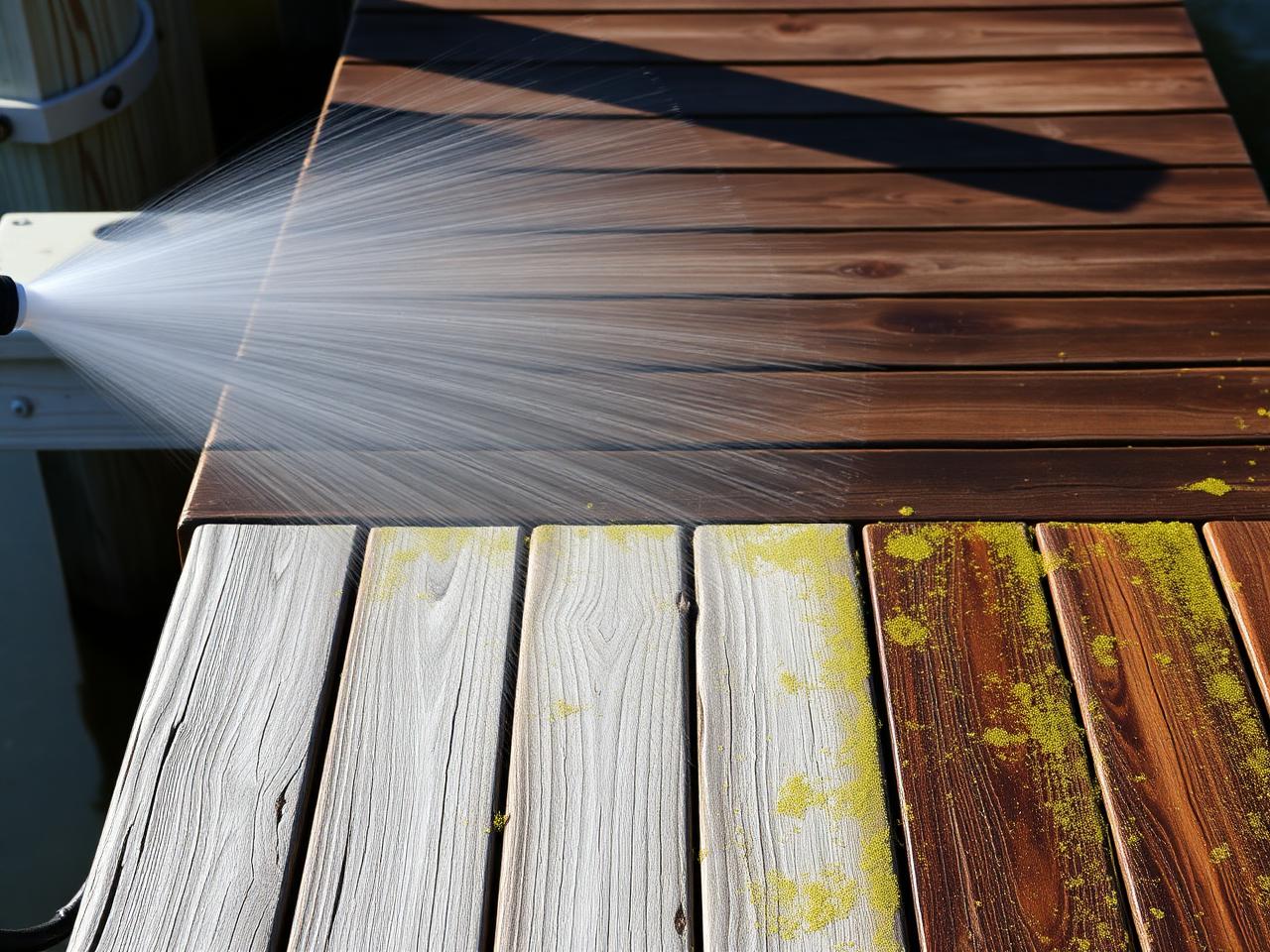
Strip algae, mildew, and waterline buildup so boards look new and feel safe underfoot — using pressures and detergents that clean the wood without tearing it up or polluting the Bay.
Leave a phone number or email — no account needed.
What's included
- Full-deck cleaning of algae, mildew, and tannin staining
- Railing, post, and step detail work
- Tide-aware scheduling so waste water doesn't run directly into open water
- Biodegradable, marine-safe detergents only
- Soft-wash on aged or composite decking
- Optional sealing or staining as a follow-up service
Why hire a specialist
Maryland waterfront work is not the same as a backyard deck. Saltwater, tides, and regulated tidal zones punish shortcuts. Here's what we bring that a general handyman doesn't:
- Wrong PSI on aged pine fuzzes the surface and shortens deck life by years. We dial pressure to the wood, not the other way around.
- We use marine-safe, biodegradable cleaners — not driveway degreaser that ends up in the Bay.
- We work with tides to keep wash water out of the water column where regulations require it.
- We spot the rotten or loose boards a generic pressure-washer would miss — and we tell you before something fails under a guest.
- We carry the right tips, surface cleaners, and soft-wash gear for wood, composite, and Trex-style boards.
- Fully insured for waterfront work — most generic pressure-washing outfits are not.
Maryland building & environmental standards
Work in and over Maryland tidal waters is governed by overlapping state, county, and federal rules. We build to these so your pier passes inspection and survives the Bay.
Clean Water Act — Discharge
Power-washing wastewater containing detergents or paint residue is a regulated discharge under the federal Clean Water Act and MDE rules. We capture and contain runoff where required and use only marine-safe biodegradable soap.
MDE Stormwater Guidance
The Maryland Department of the Environment treats direct dock-cleaning discharge to surface waters as a pollution event. We schedule for low tide and use containment matting on sensitive jobs.
Critical Area Buffer (COMAR 27.01)
Within the 100-ft Critical Area Buffer, even cleaning chemicals are restricted. We default to OMRI-listed or biodegradable surfactants and never use chlorine bleach near plantings or the waterline.
Wood Pressure Limits
Industry guidance caps softwood washing around 500–1,200 PSI with a 25°–40° tip. Anything above that on aged Southern Yellow Pine fractures grain and accelerates rot.
Slip Resistance & Liability
Maryland premises-liability standards expect a reasonable level of care on guest-accessible surfaces. A clean, de-slimed pier is the cheapest insurance you can buy.
Composite Manufacturer Specs
Trex, TimberTech, and similar composites have published max PSI and detergent restrictions. Exceeding them voids the warranty. We follow each manufacturer's spec sheet.
Informational only — actual permit requirements vary by county and specific site conditions. We coordinate with MDE and your local permitting office on every job that needs it.
Our process
- 01
Quick walk-through and free quote based on linear feet and condition.
- 02
We schedule around tides and weather for clean drainage.
- 03
Soft-wash or pressure-wash with the right tip for your wood.
- 04
Rinse, inspect, and flag any boards or hardware needing follow-up.
Ready to talk about your pier?
Leave a phone number or email and we'll reach out within one business day to schedule a free on-site look.