Service
Pier Maintenance
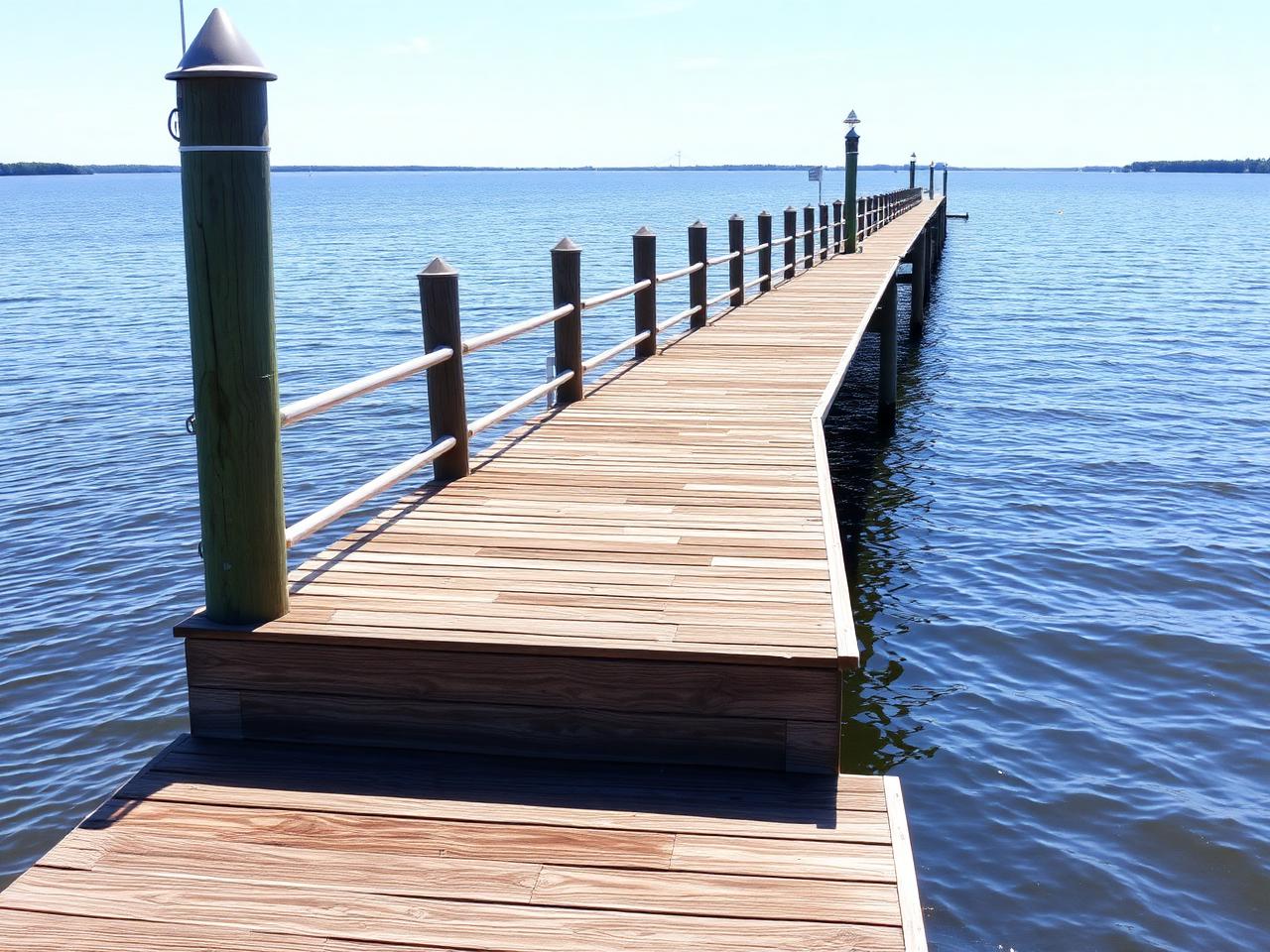
Tighten hardware, replace worn boards, restore railings, and catch rot before it spreads. Routine maintenance is the single biggest factor in how long a Maryland pier lasts.
Leave a phone number or email — no account needed.
What's included
- Re-fastening loose boards with new stainless or hot-dipped fasteners
- Replacing individual rotted or splintered deck boards
- Railing, baluster, and post repair to code-compliant heights
- Piling inspection above and at the waterline
- Hardware swap on cleats, ladders, and dock lines
- Seasonal opening and winterizing checklists
Why hire a specialist
Maryland waterfront work is not the same as a backyard deck. Saltwater, tides, and regulated tidal zones punish shortcuts. Here's what we bring that a general handyman doesn't:
- We use only stainless or hot-dipped galvanized hardware — common deck screws fail in months in brackish water.
- We know what rot looks like under paint, behind trim boards, and at the piling waterline where most piers fail first.
- We carry marine-grade Southern Yellow Pine and composite boards sized for typical Maryland pier framing.
- We work around tides and weather windows so the job actually finishes when promised.
- We document conditions with photos so you have a paper trail for insurance or future buyers.
- Local — based on the Bay, not driving in from a strip-mall handyman service.
Maryland building & environmental standards
Work in and over Maryland tidal waters is governed by overlapping state, county, and federal rules. We build to these so your pier passes inspection and survives the Bay.
Maryland Critical Area Act
Work within the 1,000-ft Chesapeake Bay Critical Area is regulated by COMAR 27.01. Routine repair-in-kind is generally allowed, but expanded footprints or new structures need county Critical Area review.
Tidal Wetlands License (MDE)
Any pier work that disturbs the bottom, adds pilings, or replaces structural members below mean high water generally requires a Maryland Department of the Environment Tidal Wetlands authorization under COMAR 26.24.
IRC Railing & Guard Standards
Guards must be at least 36 inches tall on residential structures more than 30 inches above grade or water, with balusters spaced so a 4-inch sphere can't pass through (IRC R312).
Fastener & Material Corrosion Rules
Pressure-treated lumber used today (ACQ/MCA) is corrosive to standard galvanized hardware. Code and best practice both call for stainless steel or hot-dipped galvanized ASTM A153 fasteners in contact with PT lumber and saltwater.
U.S. Army Corps of Engineers — Section 10
Construction in navigable waters of the U.S. (which includes the Chesapeake and its tidal tributaries) falls under Section 10 of the Rivers and Harbors Act. We help coordinate joint state/federal permits when scope requires it.
Local County Permits
Anne Arundel, Calvert, St. Mary's, Talbot, and other waterfront counties each have their own pier permit thresholds and setback rules. We file with your local Department of Planning & Zoning when the work needs it.
Informational only — actual permit requirements vary by county and specific site conditions. We coordinate with MDE and your local permitting office on every job that needs it.
Our process
- 01
On-site walk-through and free written estimate.
- 02
We handle permits and notifications if the scope requires them.
- 03
Materials staged, tides checked, work completed in the right weather window.
- 04
Final walk-through with photos so you know exactly what was done.
Ready to talk about your pier?
Leave a phone number or email and we'll reach out within one business day to schedule a free on-site look.